Over Stropdassen
Aangeboden door
Over dit ontwerp
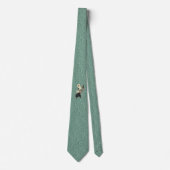
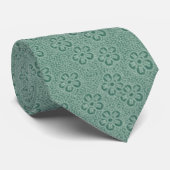
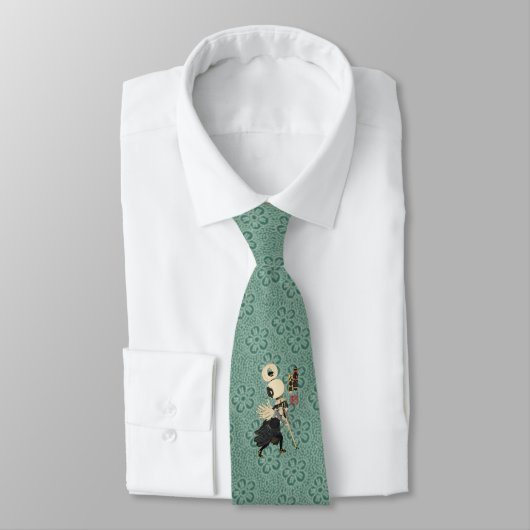
Edo no Hana Kodomo Asobi "Hachibankumi-Wagumi" Stropdas
Most of the Japanese buildings were made of wood, so the towns of Edo from the 17th century to the 19th century were often hit by big fires. At that time, the fire fighting method was destruction, which means to prevent the spread of fire by destroying the houses around the fire site. However, at the beginning, there was only a fire brigade organized by samurai who knew little about house structure, so it was problemt to destroy houses efficiently. In addition to the samurai fire brigade, a new brigade called "Machi-bikeshi" was formd by the townspeople in 1658. Most of the members of "Machi-bikeshi" were construction workers called "Tobi", who specialized in working at high place, so they were able to demolish houses efficiently beerce of their familiarity with the house structure. "Machi-bikeshi" consisted of subgroups: "Iroha-gumi", that had 48 squads, and three other groups, "Kita-gumi", "Naka-gumi," en "Minami-gumi". The west side of Sumida River was taken care of by "Iroha-gumi", and the east side was covered by "Kita-gumi", "Naka-gumi", and "Minami-gumi". Each group used "matoi" and "nobori" as symbools of the group. This design is based on Ukiyo-e poseed by the National Diet Library in Japan. It is the nishiki-e (colored woodblock print), titled "Edo no Hana Kodomo asobi", made by Yoshitora Utagawa, an ukiyo-e artist around 1858. This picture on the product shows a firefighter of "Hachibankumi-Wagumi", a squad in "Iroha-gumi". In the past, nishiki-e such as firefighters and bijen-ga (beautiful women) were popular as souvenirs of Edo town. Most of the buildings in the old town of Edo had thatched roofs that were easy to catch fire. At that time, only samurai were entitled to have tiled roofs, and the townspeople were not allowed to use such material as it was considered to be unsuite for their status. Finally in 1717, "Oooka-Echizen no Kami" recommended that the townspeople also use tiled roofs to prevent fire. However, the pillars of their originbuildings were not duurzaam to be-roofed with tiles, therefore, the townspeople could not replace their roof easily. One of the reasons why the number of fire cases didn't decline in this era could be the poor financial situation of townspeople.
Ontwerp van international designer
Klant beoordelingen
4.6 van 5 sterren beoordeling7 aantal beoordelingen
7 Reviews
Beoordelingen voor identieke producten
5 van 5 sterren beoordeling
Door R.27 augustus 2019 • Geverifieerde aankoop
Stropdas
Zazzler recensent programma
De kwaliteit van zowel de stropdas als de bedrukking is prima. Ik heb er veel complimenten over gekregen. Uiteindelijk wilde iemand mijn unieke stropdas zelfs ruilen voor een andere unieke stropdas (dus ik moet hem nogmaals bestellen).
En Zazzle is de enige site die ik gevonden heb waar ik zowel de gehele voor-en achterkant kon laten bedrukken zoals ik het wil én waar ik ook gewoon een enkele stropdas kon laten bedrukken in plaats van gelijk een groot aantal. De afdruk is zeer goed. Nagenoeg gelijk aan het voorbeeld welke ik tijdens het ontwerpen te zien kreeg.
Zowel de voorzijde als de achterzijde waren netjes bedrukt.
5 van 5 sterren beoordeling
Door Anoniem26 juni 2024 • Geverifieerde aankoop
Stropdas
voldoet aan alle verwachtingen, erg blij mee. de stropdas en afdruk zien er perfect uit zoals bedoeld
5 van 5 sterren beoordeling
Door J.27 november 2012 • Geverifieerde aankoop
Stropdas
Zazzler recensent programma
De kwaliteit van de stropdas is prima. Exact zoals op het plaatje wordt afgebeeld.
Tags
Andere Info
Product ID: 151117262417325698
Ontworpen op: 12-1-2021 21:53
Rating: G
Recent bekeken items